 Skip to main content
N2O, or nitrous oxide, is one of the most common ingredients in modern professional kitchens, even when it goes unnoticed. If you’ve ever tried a firm whipped cream made on the spot or a light foam on a drink, you’ve probably experienced the result of food-grade N2O. In this guide, you’ll learn what N2O is, what it’s used for in gastronomy, why purity matters, and how to use it safely in day-to-day operations.
What is N2O (nitrous oxide)?
N2O is the chemical formula for nitrous oxide, a colorless gas composed of two atoms of nitrogen and one of oxygen. At room temperature, it is stable and, under pressure inside a cylinder, it is in liquid form. In gastronomy, the food-grade N2O is used to incorporate gas into cream and other preparations, creating the aerated texture characteristic of chantilly and foams. Unlike CO2, which leaves an acidic flavor and serves to carbonate beverages, N2O dissolves in fat and expands the moment it exits the siphon valve, forming a firm and stable foam.
N2O food grade and the difference from other uses
Not all nitrous oxide is created equal. Food-grade N2O is produced, purified, and packaged under food safety standards, precisely to come into contact with food. There are other applications for nitrous oxide outside of the kitchen, including improper recreational uses that have no connection to gastronomy and that are outside the scope of this guide. The practical point for professionals is straightforward: in a kitchen, bar, or confectionery, the only suitable N2O is food-grade, with clear provenance and certification. This ensures a product that is safe for service and documentable in its quality processes.
99.95% purity and what that means in practice
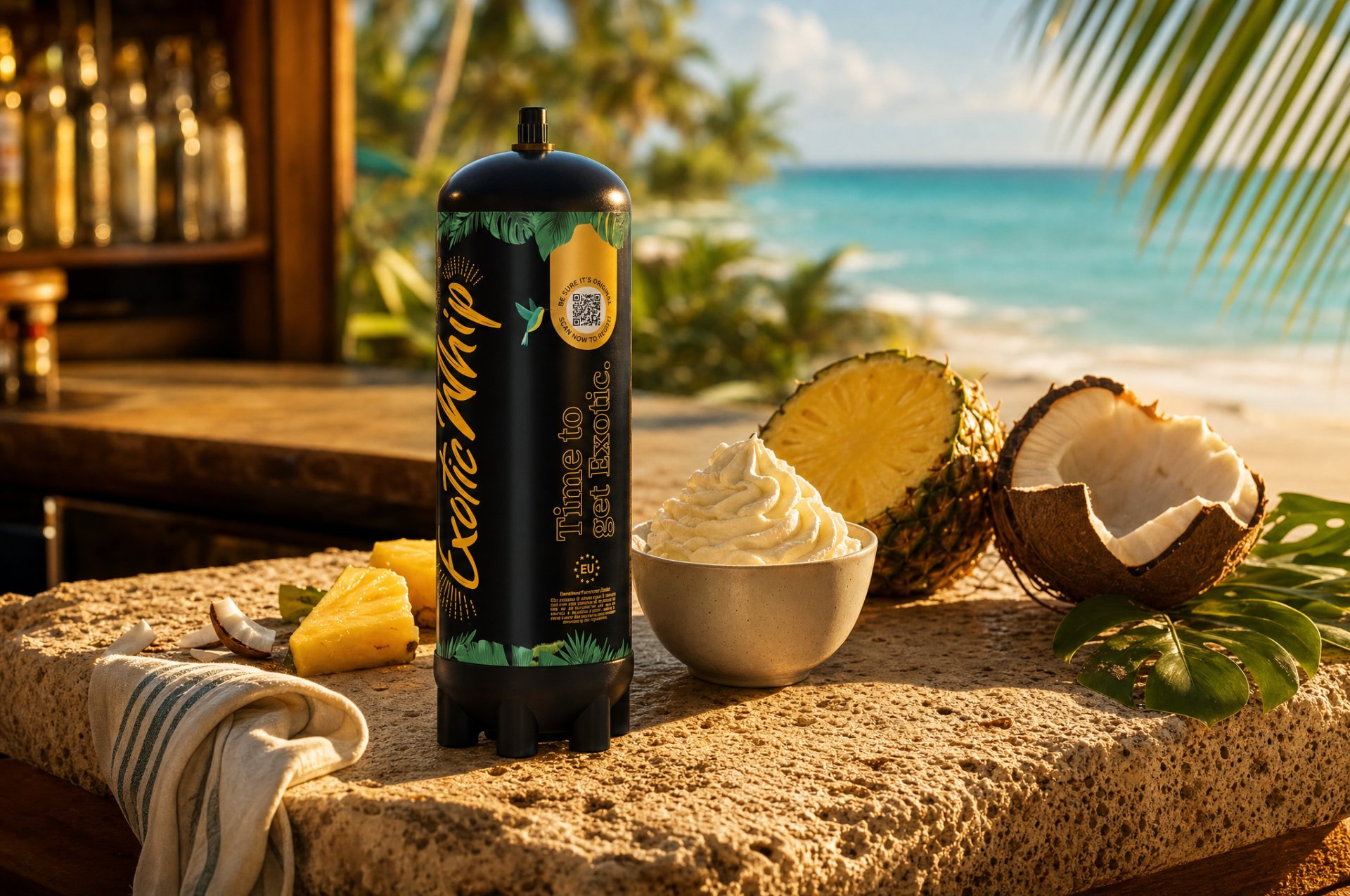
The purity of nitrous oxide (N2O) directly influences the result on the plate and in the cup. The Exotic Whip cylinder works with 99.95% purity, which means the absence of residual metallic flavor, constant foam structure, and repeatability from first to last use. For operations serving in volume, this consistency is what separates a professional result from a foam that falters in the middle of service. A lower purity can introduce strange flavors and compromise the stability of the preparation, as well as generate waste.
What is N2O used for in gastronomy?
In professional kitchens, N2O is the basis of several techniques:
- Chantilly: The most common use is with a firm, uniform cream prepared in seconds in the siphon.
- Foams: sweet or savory, from coconut to parmesan, to finish off drinks, dishes and desserts.
- Quick infusions: N2O speeds up the extraction of aromas from fats and liquids, reducing infusion times to a few minutes.
Infusions deserve special mention. By pressurizing a liquid or fat with gas and then quickly releasing the pressure, you force the aroma to enter and exit, extracting flavors in minutes. Bars use the technique for flavored oils and signature syrups; kitchens for sauce bases and concentrated-flavor desserts.
Each type of operation finds its use. Ice cream shops and confectioneries finish off cups, cakes and desserts; cafes prepare signature drinks; bars and cocktail bars create flavored foams that stay stable in the glass. For the detailed step-by-step guide, see our Quick guide on how to use the Chantilly capsules and the applications in events and gastronomy.
Safety and storage of nitrous oxide (N2O)
Like any pressurized ingredient, N2O requires proper handling. Store the cylinders in a cool, dry, ventilated place away from heat sources and flames. Keep the cream cheese refrigerated until the time of preparation and store the siphon loaded in the refrigerator, between 2 °C and 6 °C. In Brazil, the marketing and use of food ingredients follow the Anvisa standard, and working with products of certified origin is part of operating within the standards. The product is intended exclusively for professional culinary use, and each operation must follow good practices for handling food. In transportation and storage, avoid leaving the cylinders exposed to the sun or inside closed vehicles in heat, and keep them in the position indicated by the manufacturer of your equipment.
Yield: 670g cylinder vs. disposable capsules
In addition to quality, the format changes the operation’s bill. A 670g Exotic Whip cylinder yields the equivalent of more than 80 8g disposable capsules. In practice, this means fewer exchanges during service, less packaging to throw away, and a much lower cost per portion. A kitchen that finishes tens or hundreds of portions per day feels the difference both in workflow and in inventory control. A single cylinder usually covers an entire day of service in most operations. See 670g cylinder or the complete store to see the available formats.
Capsules, cylinders and the shape of N2O
The N2O food grade reaches the professional in two main formats. The 8g disposable capsules are practical for low volume and occasional use. The cylinders, such as the 670g one from Exotic Whip, are designed for continuous operation: a single unit replaces more than 80 capsules, with much less handling and disposal. The technique in the siphon is the same in both cases; what changes is the scale. For those who produce every day, the cylinder reduces interruptions in service and simplifies inventory control.
How to choose quality N2O for your business
When buying, three points make a difference. The first is the grade: it must be N2O food grade, not industrial grade. The second is the declared purity, ideally 99.95%, which guarantees the absence of residual flavor and consistent structure in the preparation. The third is the origin: a supplier with certification and local delivery avoids stock disruptions and last-minute substitutions. Working with a traceable product also makes it easier to respond to audits and maintain the same standard at all units. When calculating the margin, adding quality and yield usually pays off more than simply seeking the lowest price per unit.
Frequently asked questions about N2O
What is nitrous oxide?
Nitrous oxide is the gas with the formula N2O. In gastronomy, the food-grade version is used, which safely creates the airy texture of whipped cream and mousses in professional use.
What is N2O?
N2O is the formula for nitrous oxide, a gas used in the food industry to prepare whipped cream, foams and infusions in professional kitchens.
Is N2O the same as nitrous oxide?
Yes. N2O is the chemical formula for nitrous oxide. In gastronomy, the food-grade version is always used, suitable for contact with food.
What is the difference between the gas N2O and CO2 in the syphon?
N2O creates the firm foam of whipped cream and does not alter the flavor; CO2 is acidic and is used to carbonate beverages. For whipped cream and foams, the correct gas is food-grade N2O.
Is Exotic Whip's N2O safe for food?
Yes. It is N2O food grade with 99.95% purity, suitable for contact with food and professional culinary use, with certified origin.
Understanding what N2O is and choosing a food-grade product with proven purity is the first step to raising the standard of your operation. Whether in pastry cream, bar foam or kitchen infusions, the result starts with the quality of the raw material. See the formats available at shop and talk to our team about wholesale conditions.
Product intended exclusively for professional culinary use. It is not recommended for direct consumption or recreational purposes.